Burgundy Fall Wedding Color Scheme — The 3 Palettes That Actually Photograph
Burgundy fall wedding palette guide: the three accent combinations that work in real venue light, two Pinterest combinations that fail in person, exact HEX values to brief vendors, and the florals that hold the tone.
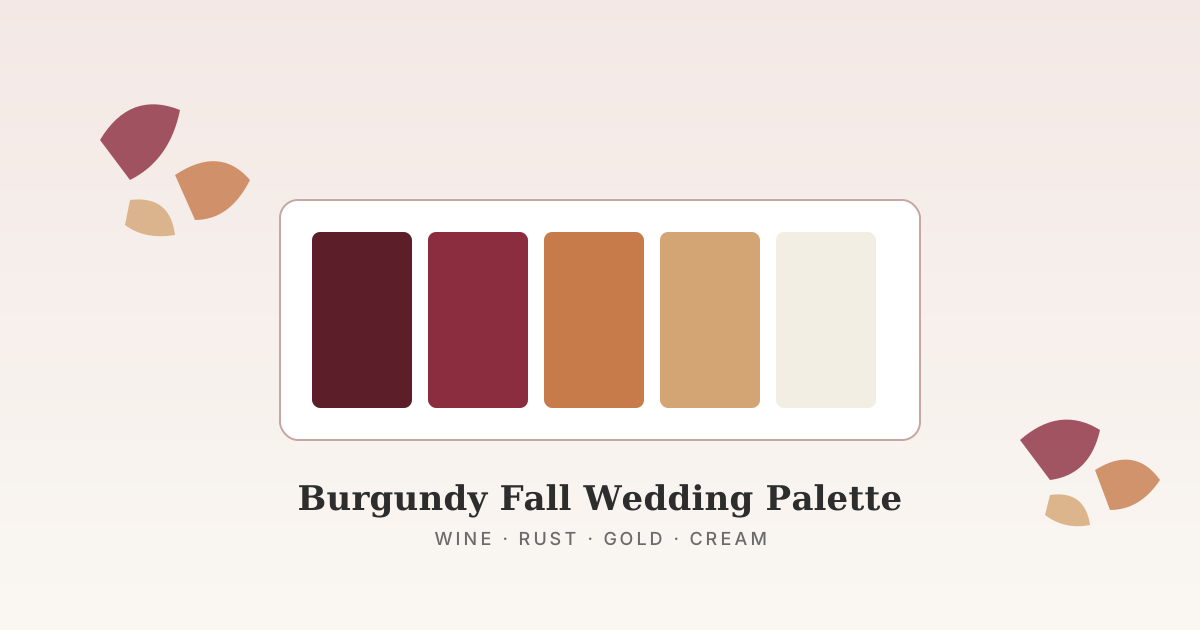
Burgundy is the most popular fall wedding color for one reason that almost nobody articulates: it's the only deep color that actually photographs well indoors. Navy goes black, forest green goes muddy, and plum drifts toward grey — but burgundy retains its red undertone in low light, which is why October and November receptions keep returning to it. Below is the practical guide to making burgundy work as a fall wedding palette, including the three combinations that actually photograph and the two that look better on Pinterest than in life.
The right shade of burgundy matters
"Burgundy" covers a wide HEX range — from #5C1F2A (deep wine, almost black) to #8B2C3F (true burgundy) to #A03A4F (lighter cranberry). The three behave very differently:
- Deep wine (#5C1F2A). Best for moody/winter weddings. Reads almost black in venue light. Pair with metallics, not other dark tones.
- True burgundy (#8B2C3F). The most-used wedding shade. Works in any indoor lighting, flatters most skin tones in bridesmaid dresses, photographs consistently.
- Cranberry (#A03A4F). The lightest credible burgundy. Reads brighter and younger; better for early-fall (September) than peak fall.
If you tell three vendors "burgundy" without a HEX, you'll get back three different colors. Lock the number early.
Three burgundy combinations that actually photograph
- Burgundy + rust + gold + cream. The classic fall harvest palette. Rust does the warmth, gold does the shine, cream does the breathing room. Five colors is the upper limit before the photo gets busy — don't add a sixth.
- Burgundy + blush + sage + cream. The unexpected combination — the blush softens the burgundy, sage adds the green that fall florals need, cream keeps the tablescape light. Better for September weddings than November.
- Burgundy + champagne + cream. The minimalist option. Three colors, high contrast, works in any season but reads particularly well in winter. Best for formal/black-tie ceremonies.
Two burgundy palettes that look better on Pinterest than IRL
Burgundy + navyreads as one color in candlelit venues. Both pull toward black under warm light — guests can't distinguish the two, and the ceremony photos lose the contrast they look like they have on the moodboard.
Burgundy + forest green suffers the same problem one notch less severely. The combination works only in bright daylight ceremonies; everything moves indoors at the reception and the contrast collapses.
Burgundy florals that actually exist
Most florists will reach for these when you say burgundy:
- Garden roses in "Black Baccara" or "Hearts"
- Dahlias (the wine-toned varieties — Cornel, Karma Choc)
- Burgundy ranunculus (the dyed ones — true burgundy is rare)
- Calla lily (deep purple varieties read as burgundy)
- Snapdragons in burgundy (vertical line, dramatic)
- Astilbe (textural; cranberry tones)
Pair with: dried wheat, copper beech foliage, eucalyptus (silver-toned, not blue-toned), or burnished oak leaves for fall. Avoid: bright red poppies (compete), peonies (off-season unless early September).
Where burgundy goes wrong in real weddings
The most common failure is using burgundy on too many surfaces. Burgundy bridesmaids + burgundy linens + burgundy florals + a burgundy welcome sign reads heavy, even in fall. The fix is to let burgundy own one or two zones (florals + bridesmaids, OR linens + signage) and use cream or champagne everywhere else.
The second failure: matching burgundy across velvet (linens), chiffon (bridesmaid dresses), and printed paper (invitations). These three substrates take burgundy completely differently — velvet goes deeper, chiffon goes pinker, paper depends on the printer. Don't expect them to match perfectly. Pick the primary substrate (usually bridesmaid dresses) as the reference and let the other two be in-family rather than identical.
Build your burgundy palette
To preview your exact burgundy in a tablescape, bouquet, and bridesmaid lineup before vendors execute, use the wedding palette generator — pick your burgundy HEX, lock the accent colors, and the tool renders six application scenes. Generate the vendor brief PDF with the HEX, Pantone equivalents, and reference images, and every vendor gets the same starting point.