How to Decline a Coworker's Wedding Invitation (4 Templates)
The right way to decline a coworker's wedding invitation: match their formality, keep it under 3 sentences, skip the reason. 4 ready-to-use wordings.
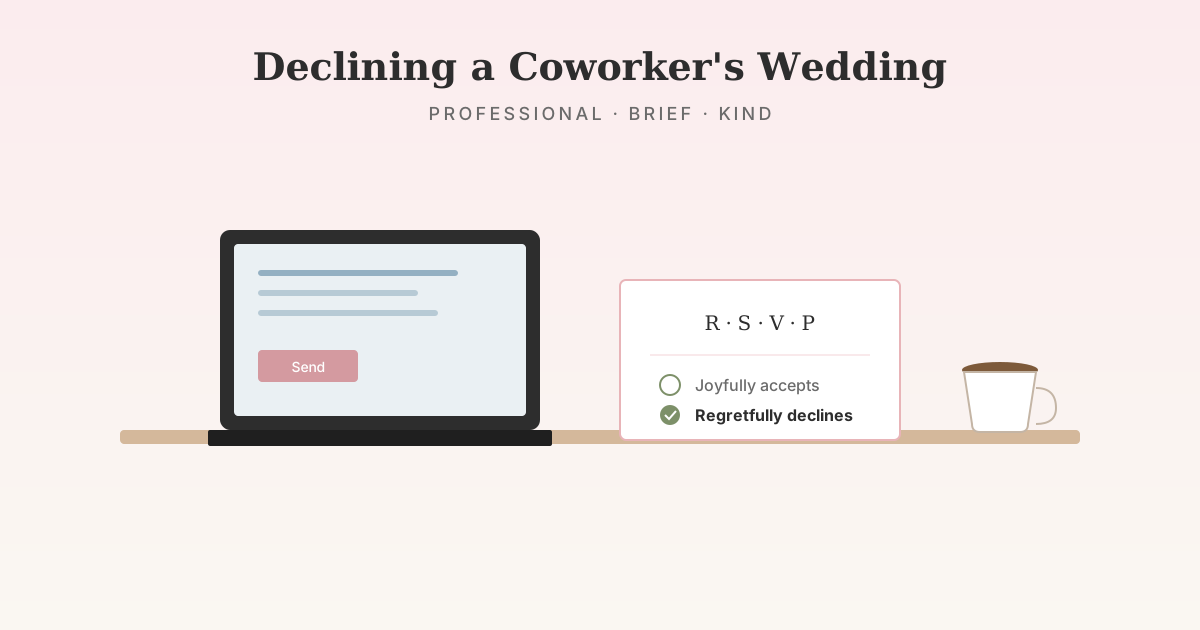
The right way to decline a coworker's wedding invitation is to match the formality of how they invited you and keep the message under three sentences. Coworker weddings are the lowest-stakes decline in the etiquette book — they expect a meaningful decline rate, the relationship is defined by the office, and no one is keeping score. The mistakes people make come from over-explaining, not from declining.
Three rules of register for coworker declines
Coworker weddings sit in a specific tonal register: warm but not intimate, professional but not corporate, brief but not curt. Three rules to keep the message in that band:
- Match the channel. They texted you the invite? A text decline is fine. They sent a printed save-the-date with an RSVP card? Mail the card back and follow up with an email. Don't escalate or deflate the formality.
- Keep it under three sentences. One thank, one decline, one wish. No explanation paragraph. The longer your decline, the more you sound like you're covering something.
- Don't bring it up at work. Once the decline is sent, the topic is closed. Don't re-explain in the kitchen. Don't bring a gift to the office. Don't ask how it went unless they bring it up first.
Four example wordings (text / email / RSVP card / verbal)
Text reply: "Thank you so much for thinking of us! We're going to have to miss this one but wishing you both a wonderful day — congratulations to you both 💛"
Email reply: "Hi Jordan — thank you for the invitation. Unfortunately I won't be able to make it that weekend, but I'm so excited for you both. Wishing you a beautiful day."
RSVP card return: Mark "Regretfully declines" on the card and add a single handwritten line on the back: "Thank you for thinking of us — wishing you the most beautiful day."
In-person follow-up (if they ask): "Thank you again for the invite — couldn't make the timing work, but I'm really happy for you both." That's the entire script. Don't volunteer a reason.
Reasons you can use (and ones you shouldn't)
Coworker declines are the one case where giving no reason is actively encouraged. The relationship doesn't require it, and a reason invites follow-up questions. If you do give one, the safe options:
- "I have a prior commitment that weekend" (vague but appropriate)
- "Travel doesn't work for us that weekend" (if destination)
- "I'll be out of town" (only if it's actually true)
- "Childcare conflict" (only if applicable)
Avoid: "I have a work deadline" (they're a coworker — they'll know if it's real). Avoid: anything about money. Avoid: any reason you'd be embarrassed to be asked about Monday morning.
Gift or no gift?
For coworkers, a gift is optional. The etiquette guideline:
- Close work friend you'd see outside the office: $25–$50 registry gift or a small group gift contribution. Send it before the wedding, not after.
- Coworker you only see at work: No personal gift expected. If the office is doing a group card or group gift, contribute to that — it's the appropriate channel.
- Coworker on a different team or in a different building: A handwritten card is enough. The invitation was a courtesy; the response is the gift.
Three mistakes that turn a clean coworker decline into office gossip
- Telling other coworkers why you're not going. Even if your reason is benign, the version that gets back to the couple won't be. Your decline is between you and them.
- Posting on social media the same weekend. If you said you had a conflict, your Saturday brunch photo is evidence you didn't. Either go quiet that weekend or don't cite a conflict.
- Saying yes verbally, declining on paper. The hallway "oh I can't wait" followed by a mailed-in decline is the worst version. If you're not sure, say nothing in person until you've RSVPed.
FAQ
Do I have to give a reason for declining a coworker’s wedding?
No — coworker declines are the one case where giving no reason is actively encouraged. The relationship doesn’t require it, and offering one just invites follow-up questions.
Do I need to bring a gift if I’m not attending?
Depends on the closeness. A work friend you’d see outside the office: $25-$50 or a group contribution. A coworker you only see at work: no personal gift expected — contribute to a group card or gift if the office is doing one.
What’s the biggest mistake people make declining a coworker’s wedding?
Telling other coworkers why you’re not going. Even a benign reason tends to get distorted by the time it gets back to the couple — keep the decline between you and them.
Use the generator for tone-specific wording
For more variations or to test your own wording against the believability scorer, the decline generator builds three side-by-side versions for any coworker scenario. Worth bookmarking: coworker + work conflict, coworker + schedule conflict, and coworker + destination too far.
Declining someone outside the office? The 12 wedding RSVP decline wording templates cover every tone — safe, honest, and diplomatic — across travel, schedule, and health reasons, a broader set than the coworker-specific wordings above. For the general etiquette reasoning behind every decline, see how to politely decline a wedding invitation.