How to Pick a Wedding Date — 7 Ranked Criteria (and What Wins When They Conflict)
Most guides treat 8-10 date factors as equal. They aren't. Here's the 7-criterion ranking from immovable to noise — and the conflict-resolution rules when two collide.
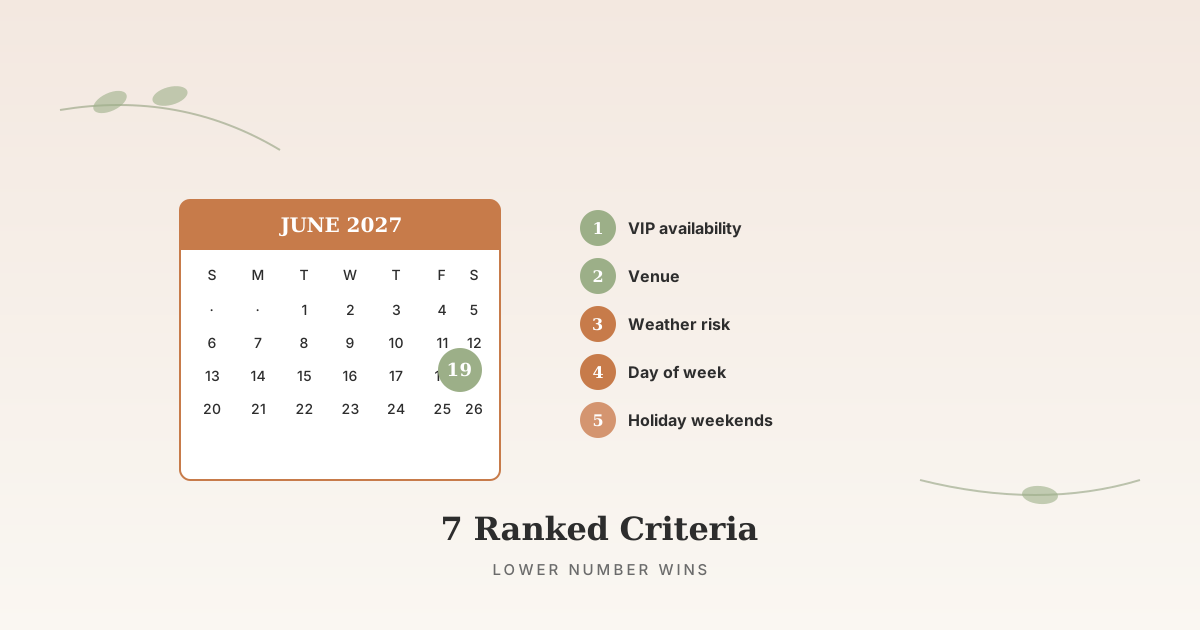
Picking a wedding date is a constraints problem, not a preferences problem. Most guides list 8-10 factors to consider — season, venue, vendors, budget, personal significance, guest schedules — and treat them as roughly equal. They are not. Some constraints are immovable; others are aesthetics. When they conflict, you need to know which one wins. Below, the seven criteria ranked by how unmovable they are, plus the conflict-resolution rules when two of them collide.
The 7 criteria, ranked
1. Key VIP availability (immovable)
Three to five people whose absence would change the meaning of the wedding — typically immediate family, the officiant if personally chosen, and the people standing with you. Ask each for their known blackouts (medical, military deployment, siblings’ weddings, terminal-illness family members) before you do anything else. If your sister is having a scheduled C-section in October, you don’t get married in October.
2. Venue availability (semi-immovable)
If you have a specific venue in mind and it’s the venue, venue availability is the second-hardest constraint. Popular venues are booked 12-18 months out for Saturdays; for peak-season Saturdays (May, June, September, October), 18-24 months. If the venue isn’t booked, this drops in priority — choose date first, then venue.
3. Regional weather risk (semi-immovable for outdoor)
For outdoor ceremonies, this jumps to #2. Sample regional risks for the US in 2026: Florida hurricane season (June-November, peak August-September); Pacific Northwest rain (October-April); Texas / Southwest heat (June-September, often 100°F+); Northeast coastal nor’easters (January-March); Midwest tornado season (April-June). For indoor weddings, weather drops to a guest-comfort consideration but not a date-killer.
4. Day of week (budget multiplier)
Saturday is the default and costs the most. Friday or Sunday cuts venue rental 20-40%, vendor minimums 10-20%, and hotel room blocks 15-25%. Friday evenings work for local-guest-heavy weddings; Sunday afternoons work if you can have the reception end by 9pm so guests aren’t exhausted Monday. Thursday weddings save more but reduce guest attendance ~15-25% — people can’t take a half-day for a friend’s wedding as easily as for a sibling’s.
5. Holiday-weekend strategy (mixed)
Three-day weekends (Memorial Day, Labor Day, Fourth of July weekend, Thanksgiving weekend, Christmas / New Year) are controversial. Pro: guests have an extra day, travel works better. Con: flight prices spike 20-50%, many guests have existing traditions on these weekends. Empirical pattern: Memorial Day and Labor Day weekends work well for destination-style weddings; Thanksgiving / Christmas / New Year work poorly except for very small weddings with already- gathered family. Fourth of July weekend is fine if your venue isn’t near fireworks routes.
6. Personal significance (movable)
Dating anniversaries, grandparents’ wedding anniversary, the day they proposed. Lovely but should not override 1-3. Many couples discover that their preferred anniversary Saturday is the one their cousin already booked or the one with a regional weather risk. If the personal date is a weekday and everything else is fine, the Friday or Saturday nearest to it usually carries the same emotional weight.
7. Guests’ general schedules (mostly noise)
Asking every guest about their schedule produces too many false constraints — most people’s “I have a thing that weekend” is movable when you give them a 9-month save-the-date. Stop polling after the 3-5 VIPs in criterion 1. For everyone else, the save-the-date is the schedule check.
Conflict-resolution rules
When two criteria collide, the rule of thumb is “lower number wins.” Three specific high-frequency conflicts:
- Venue available on a weekday, not Saturday (criterion 2 vs 4). Take the weekday — venue beats day-of-week. The savings partially fund the off-day “cost” (e.g. easier-to-book vendors, lower hotel rates).
- Anniversary date conflicts with VIP blackout (criterion 6 vs 1). VIP wins. Always. The anniversary date can be celebrated as a yearly tradition, separate from the wedding date itself.
- Outdoor venue requires risky weather window (criterion 2/3). Have a real rain plan written into the venue contract and shared with vendors. If the rain plan is the parking-lot tent, weather is now movable — pick the prettier weather window anyway. If the rain plan is “we hope it doesn’t rain,” weather wins; pick a safer window.
Find good Saturdays without combing the calendar
For a year-ahead view filtered by season, regional weather risk, holiday conflicts, and budget tier, use the wedding date finder — pick your region and constraints, get a shortlist of 12-20 good Saturdays. For a curated rundown of 2027 Saturdays with weather + holiday notes, see best wedding dates 2027.
Where the ranking breaks
Destination weddings flip parts of the ranking. Day-of-week matters less (guests are travelling regardless), VIP availability matters more (fewer VIPs travel), and the venue / weather pair often becomes interchangeable because the whole reason for a destination is that weather is reliable. Cultural / religious dates (Hindu auspicious dates, Jewish observance of Shabbat through Saturday sundown, Islamic avoidance of Muharram) also override the ranking — if your tradition has date rules, those take precedence over every other criterion here.