How to Step Down as a Bridesmaid Without Losing the Friendship
The 3-paragraph exit script that preserves friendships, the timing windows that matter, and the five traps that turn a graceful exit into fallout. Plus when stepping down is the wrong call.
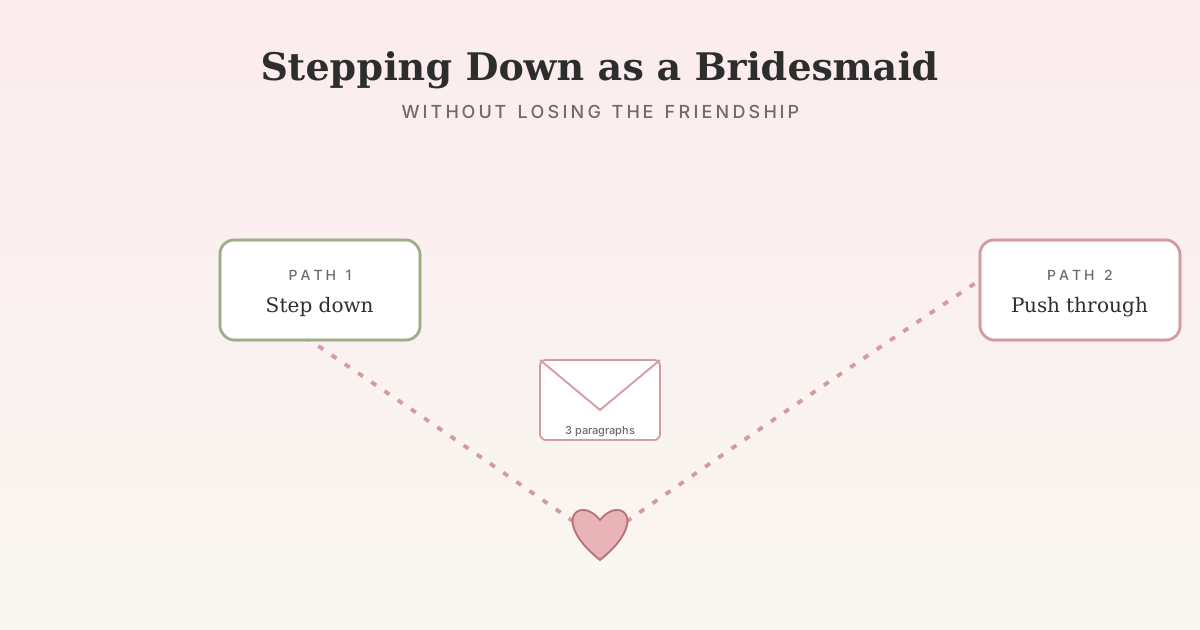
Stepping down from a bridesmaid role can preserve the friendship — but only if you do it as a single conversation, in three paragraphs, delivered at least four months before the wedding. The exit messages that destroy friendships almost all share two traits: they arrive too late, and they explain too much. Below is the exact 3-paragraph script that works, the three scenarios where stepping down is the right call (and the two where it isn't), and the five traps that turn a graceful exit into years of fallout.
When stepping down is the right call
Most posts about quitting bridesmaid roles default to "here's how to leave gracefully." That skips the hardest question, which is whether to leave at all. Three scenarios where the right answer is to step down:
- The financial commitment crosses 5% of your annual take-home. The 2026 US average all-in bridesmaid cost is around $1,800. For someone earning $40K, that's 4.5% of gross — already borderline. Above 5% you're putting credit-card debt against a friendship that doesn't require it.
- A health event makes the duties unsafe. New diagnosis, pregnancy with complications, recovery from surgery, mental-health crisis. These are not negotiable. Stepping down protects both you and the bride from a last-minute cancellation in the wedding week itself.
- The bride's asks have crossed into territory you won't enter. Mandatory weight loss, mandatory hair color, exclusionary treatment of other bridesmaids, demands on your personal life outside the wedding. The full diagnostic list is on the bridezilla score tool — if you're scoring above 60, stepping down is self-preservation, not betrayal.
When it's not — push through
Two scenarios where stepping down is the wrong call even if it feels appealing:
- You're three weeks from the wedding. At that point the photo order is set, the dress has been paid for, the seating chart is built around the wedding party. Pushing through three weeks is a smaller cost than the permanent damage of a late exit. The exception is health — health overrules timing.
- You're stepping down because of a recent argument. Wedding-prep tension is normal. If the trigger for your exit is a single fight in the last six weeks, the underlying issue is the fight, not the role. Resolve the fight (or wait two weeks for it to settle) before deciding.
The 3-paragraph script
Send via a written message (text or email) you can read back to yourself. Verbal-first feels more respectful but invites live-debate the bride isn't prepared for. Written gives her time to react in private. Follow up in person within 48 hours.
Paragraph 1 — the news, with no preamble:
Sarah — I've made the hard call to step back from being a bridesmaid. I wanted to tell you directly rather than wait. I love you and I want to be at your wedding as a guest, but I can't commit to the bridesmaid role.
Paragraph 2 — one concrete reason, no apology spiral:
The reason is financial — the all-in cost is more than I can carry this year, and I've sat with it long enough to know rearranging isn't going to change that. I'm sorry the timing isn't earlier. I should have raised the budget concern sooner.
Paragraph 3 — what you still want to offer:
I want to still help in ways I can. I'd love to come to the bridal shower, help address invitations, or be on point for anything else that doesn't require the bridesmaid budget. I understand if you need space for a few days. I love you, and I'm here whenever you're ready to talk.
Total: about 150 words. Longer reads as defensive; shorter reads as cold. Don't add a fourth paragraph. Don't re-explain the reason. The bride will fill in details with her own questions — answer those when they come.
Timing — earlier > later, always
The single biggest predictor of friendship survival is how many weeks remain when you send the message:
- 16+ weeks out: Best case. Bride has time to ask a replacement, dress order can be cancelled, no photo or seating disruption. Most friendships survive intact.
- 8-16 weeks: Workable. Dress may already be ordered (sometimes non-returnable), bridal shower already on calendar. Friendship survives in most cases but with a cooling period of a few weeks.
- 4-8 weeks: Damaging. The bride is in execution mode and your exit becomes a logistical crisis on top of the emotional one. Step down only if you genuinely cannot continue.
- < 4 weeks: Don't — unless health-related. Push through and process afterward.
Five traps that turn graceful exit into fallout
- Telling other bridesmaids before the bride. The version that gets back to her won't be yours. Whatever your reason, the bride hears it first.
- Posting about "wedding drama" on social. Even vague-tweeting reads as public criticism. The bride and her family will find it. Stay quiet online for six months minimum after the exit.
- Coming to the wedding and visibly checking out. If you accepted the guest-invitation, show up engaged. A stepped-down bridesmaid who shows up sulking is the worst version of the exit.
- Asking for the bridesmaid dress back / for a return. Don't ask. If the bride offers, accept. If not, treat the dress cost as the price of the exit and don't mention it again.
- Reopening the conversation after the wedding. Once the wedding is done, the topic is closed. Don't relitigate. Don't apologise again. Don't explain again. Treat the role exit as a closed chapter.
If the bride takes it badly
The most common bad outcome: the bride goes silent. Don't fill the silence. Send one follow-up message at the 7-day mark:
I know this landed hard. I'm not going to push for a conversation, but I want you to know I'm here whenever you're ready. I'm not going anywhere.
After that, leave it. Some friendships need three months of silence to reset. Others need a year. A few don't survive — and that's information about what the friendship was, not a verdict on whether you made the right call. The bride who ends a friendship over a bridesmaid exit was building toward that ending regardless.
Related reading
Before deciding, get the cost picture in front of you with average bridesmaid cost 2026 and when the bachelorette costs too much. Sometimes the right call is renegotiating one line item rather than the whole role — see affordable bridesmaid dresses for the specific dress-cost lever. And if the underlying issue is unreasonable demands, run the situation through the bridezilla score tool to get objective benchmarks.
Where this advice breaks
This script assumes a relatively healthy friendship with a bride open to honest conversation. If the bride is the kind of person who responds to any disagreement with public retaliation or family-wide smear campaigns, the exit playbook is different — and the friendship was probably already strained beyond what stepping down can salvage. In that scenario, a shorter, more clinical message is better than the warm 3-paragraph version above.