How to Write a Wedding Toast in 30 Minutes (When You Were Asked Last-Minute)
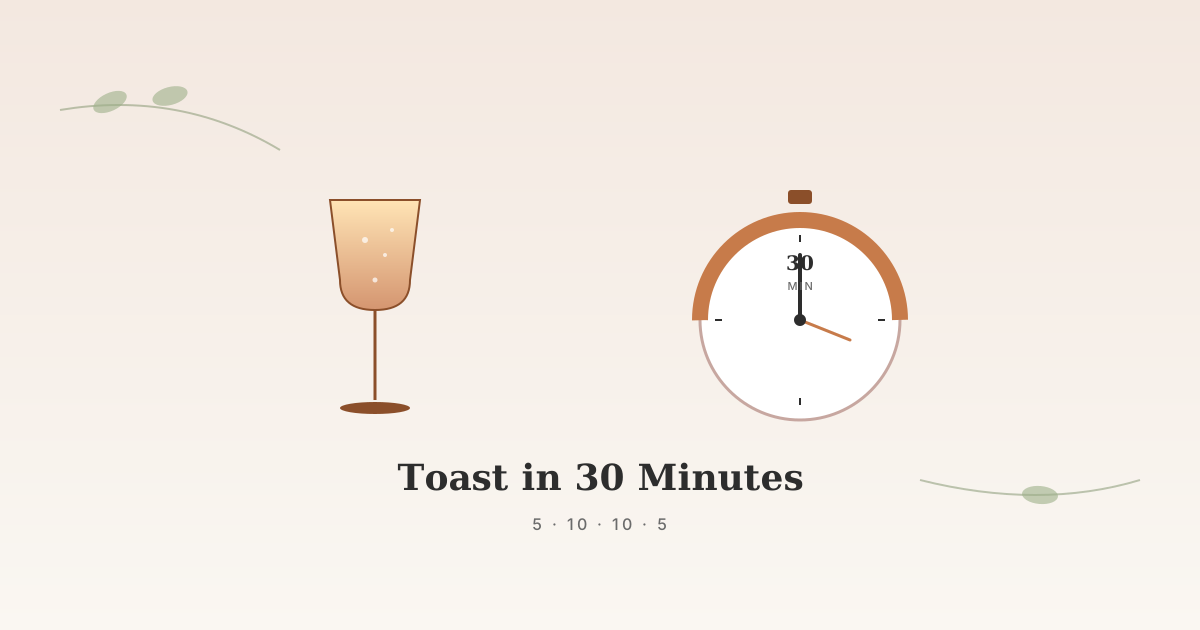
Timer-based 30-minute process: 5 min brainstorm, 10 min structure, 10 min draft, 5 min read-aloud. The 5-line scaffold that produces a 90-second toast worth giving.
If you were asked to give a wedding toast last-minute, the mistake is trying to write a great toast. Write an honest 90-second one — the audience prefers that to ten minutes of recycled phrases anyway. The 30-minute timer-based process below is what works when you’re writing the morning of, the night before, or in the Uber to the venue. Set an actual timer. Don’t skip the read-aloud step.
The 30-minute breakdown
Five minutes brainstorm. Ten minutes structure. Ten minutes draft. Five minutes read-aloud and final cuts. Each step has a clear output — if you finish the step early, do not go back to polish the previous one. Forward only.
Minutes 0-5: Brainstorm with three prompts
Open a notes app. Set the timer for 5 minutes. Answer three prompts in bullet form, no editing:
- One moment. A specific scene that captures how you see this person — a conversation, a place, an action they took. Not how you met, not the relationship arc — one scene.
- One quality. The single quality of theirs that matters most to you. Skip the list. Pick one.
- One wish.What you actually wish for them — concrete, not “a lifetime of happiness.”
Stop at 5 minutes. The bullets are not the toast yet — they are the raw material.
Minutes 5-15: Structure (10 minutes)
Five lines. Write each in one sentence, no qualifiers:
- Who you are. “I’m [name], [the bride / groom’s] [relationship].” One sentence. Skip the long backstory.
- The moment. The scene from the brainstorm. Tighten to two sentences max.
- The bridge.One sentence connecting the moment to the quality. “That’s [quality] in a sentence.”
- The wish. One sentence directed at the couple. Specific.
- The toast. “To [the couple] — [the wish, as a toast].”
Five lines, ~90-120 seconds spoken. That’s the toast.
Minutes 15-25: Draft (10 minutes)
Expand each of the five lines to its full prose form. The moment becomes a paragraph; the rest stay close to a sentence. Two constraints: no thesaurus reaches (“exquisite,” “profound,” “quintessential” — all out), and no recycled phrases (“tied the knot,” “better half,” “happily ever after”). Both signal AI or generic generator output. The audience registers them within 5 seconds.
Minutes 25-30: Read aloud + final cut
Read the draft out loud at speaking pace, in the room. Time it. Three rules in this pass: any line that you stumble on gets cut or rewritten (the stumble is your subconscious flagging awkwardness), any sentence longer than 18 words gets split, and the closing toast line gets practised twice. The closing line is what guests remember most; it should land clean.
The single anchor anecdote rule
One anecdote, not three. The instinct under time pressure is to stack more — three short stories instead of one. It fails: guests can only follow one thread in a 90-second toast. Pick the anecdote that shows a specific quality the couple themselves probably can’t articulate about each other. That’s what makes the toast worth giving.
Things to cut, in order
- Inside jokes. Two dozen people will laugh, two hundred will be confused. Cut.
- Long thank-yous. Acknowledging the parents and bridal party is the couple’s job, not the toaster’s.
- Generic marriage advice. The room is full of married guests. They have advice already.
- Quoted poetry / song lyrics. Almost always lands cold unless directly tied to the couple. If you must, one line maximum.
- Apologies for the toast (“I’m not good at this…”). Confidence-erasing opening. Skip.
Practice twice, then stop
Two practice runs are optimal. Once with the timer to verify length. Once at speaking pace to internalise the rhythm. Past two practices, the toast gets robotic — it starts to lose the speaker’s actual voice. The audience can tell.
Speed up minutes 0-15
If you can’t even start, the wedding toast generator produces a structured first draft from your three answers (who, moment, wish) — skip directly to the draft step of the 30-minute process and cut from there. For 100 short toast examples organised by tone (funny, sentimental, classic), see 100 wedding toast examples. For sister-of-the-bride specifically, sister of the bride toast examples.
Where this process breaks
Two scenarios. First, the rehearsal dinner — those toasts are typically longer (4-5 min) and the room is more attentive because it’s smaller. The 30-minute process produces a 90-second toast that may feel too brief for a rehearsal dinner; add one more anchor anecdote in the draft step. Second, the toast itself isn’t actually the problem — if you have a fraught relationship with one half of the couple and a history of awkward speeches, no 30-minute process fixes that. Decline the role and send a written card instead.