How Long Should Wedding Vows Be? (The 90-Second Rule)
Wedding vows should land at 90 seconds (180-220 words) — not the vague "30 seconds to 3 minutes" range. The word-count math, plus 4 signs yours is too long.
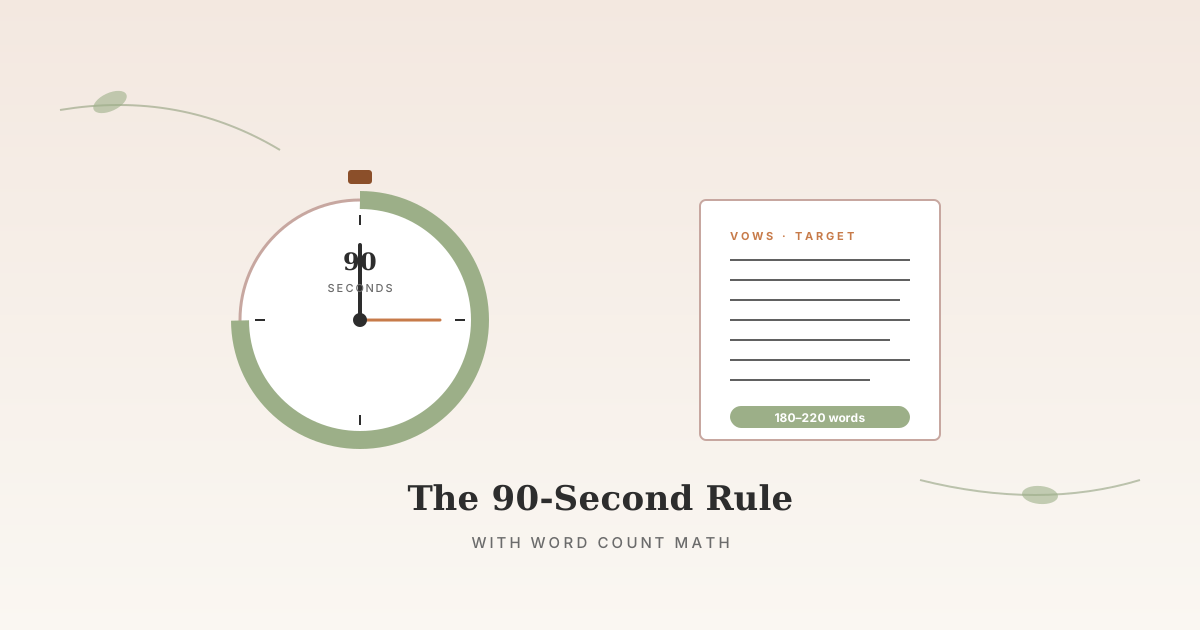
Wedding vows should land at 90 seconds, give or take 15 seconds. Going past 2 minutes consistently makes vows feel like a recitation; coming in under a minute usually means you dodged the harder line. The standard advice (30 seconds to 3 minutes) covers a 6× range, which is not actually advice. Below: the word-count math behind the 90-second target, the “mismatch tax” when partners’ vows are wildly different lengths, and the four padding tells that signal a too-long vow.
The math
Average reading pace under emotional speaking conditions is roughly 130-150 words per minute (faster than a TED talk because vows are intimate / shorter sentences, slower than regular speech because of pauses). 90 seconds at this pace = 195-225 spoken words. That’s about 35-40 lines of natural prose, or roughly the length of a long Instagram caption.
Word count is the more reliable target than time because speakers slow down under nerves. A vow that times at 90 seconds in your kitchen will usually run 105-110 seconds at the altar.
Why not shorter
Vows under 60 seconds (130 words) usually contain only the commitments and not the specific observations that make the commitments feel earned. The form has three structural elements: a specific opening moment, the substantive commitments, and a personal closing line. Cutting under a minute typically forces you to drop either the opening moment or the closing line, and both are load-bearing.
Why not longer
Vows past 2 minutes (280+ words) feel longer than they are because the audience is standing or silent, listening hard. Past 2 minutes:
- Guests start to compare to the previous speaker (if it’s the second vows being read).
- The officiant’s timing falls behind; the rest of the ceremony compresses.
- The emotional peak shifts from the vows to the moment of completing them — the “finally” energy is the wrong note to end on.
The mismatch tax
When partner A’s vow runs 45 seconds and partner B’s runs 3 minutes, the audience reads a mismatch — and so does partner A. The mismatch costs more than the length difference itself: it surfaces a perceived imbalance in effort or feeling, regardless of whether one exists. Two specific fixes:
- Share word counts but not content. Tell each other your target word count (~200 words / 90 seconds) two weeks before the wedding. Compare your actual drafts on word count only — no reading the prose. Adjust if one is significantly past or under.
- Have a third party time both. Bridal party member or officiant reads both vows aloud (alone, in private). Reports back the timing in seconds. The partner whose vow is significantly off the target adjusts. Reading aloud is the only reliable timing — eyeballing word count under-predicts by 20-30%.
The 4 padding tells
Signs a vow is too long. Cut these and the rest of the vow usually lands at the right time.
- Multiple how-we-met details. One sentence about how you met is enough. Three sentences recapping the timeline is filler.
- Lists of qualities (more than 3). “Your kindness, your patience, your humour, your warmth, your strength” — five qualities is forty-five words about nothing specific. Pick one quality and write one sentence that proves it instead.
- Repeated promise structures. “I promise to love you. I promise to support you. I promise to be your partner.” The anaphora feels rhetorical but each line carries little additional information. Three promises max; ideally with specific contexts attached.
- Borrowed quotes or song lyrics. A Hemingway line or a song couplet usually adds 15-30 seconds and rarely adds meaning beyond what your own sentence would have. Cut. The vow should sound like you, not a Pinterest board.
Word-count target by vow style
- Personal / spoken: 180-220 words. The 90-second target. Best for most couples.
- Personal + traditional “I take you” combo: 140-160 words of personal vow + 40-50 words of traditional. The combined block lands at ~80-90 seconds.
- Religious-led with vow add-on: 80-120 words. Shorter because the ceremony around it carries most of the structural weight; the personal piece is a brief insertion.
Time-test before the day
Read your vow out loud, slowly, in the bathroom of your home, once. Time it. Add 15-20 seconds for nerves at the altar. If the total exceeds 2 minutes, cut. If under 75 seconds, you likely have a structural hole worth filling — see the four prompts in why most wedding vow templates feel hollow.
Write the vow
For a structured first draft from a few prompts, use the wedding vow generator — pick a tone, answer the prompts, get a 180-220 word draft you can shape. For the complementary how-to-write guide, see how to write wedding vows.
FAQ
How long should wedding vows be?
90 seconds, give or take 15 seconds — about 180-220 spoken words at the pace people actually talk under emotional conditions. That’s narrower and more useful than the standard “30 seconds to 3 minutes” advice, which spans a 6× range and doesn’t actually tell you where to land.
What happens if wedding vows run too long?
Past 2 minutes (280+ words), vows start to feel longer than they are: guests compare it to the previous speaker, the officiant’s timing falls behind and compresses the rest of the ceremony, and the emotional peak shifts from the vows themselves to the relief of finishing them.
What if my vows are much shorter than my partner’s?
That’s the “mismatch tax” — a big length gap reads to the audience (and to the shorter partner) as an imbalance in effort, whether or not one exists. Fix it by sharing target word counts (not content) two weeks out, or having a third party read both vows aloud and report back the timing.
Where the 90-second rule breaks
Three cases. First, traditional religious vows (Catholic, Orthodox, Hindu, Islamic, Quaker) are themselves the vow; length is set by liturgy. Don’t modify. Second, symbolic exchanges added to short personal vows (ring exchange with brief words, handfasting, lasso ceremony) can sit comfortably with vows as short as 30 seconds — the symbol carries part of the weight. Third, ceremonies where the officiant reads a long passage before the vows: shorten the vows themselves to ~60-70 seconds so the total spoken section stays balanced.