The 7 Wedding Vendor Upsells That Cost Couples $5K (And How to Spot Them)
The seven most common wedding vendor upsells — florist premium, photographer hours, venue F&B, planner add-ons, DJ premium, cake design, rehearsal coordination — with dollar ranges, decline scripts, and the cases where the upsell is actually worth saying yes to.
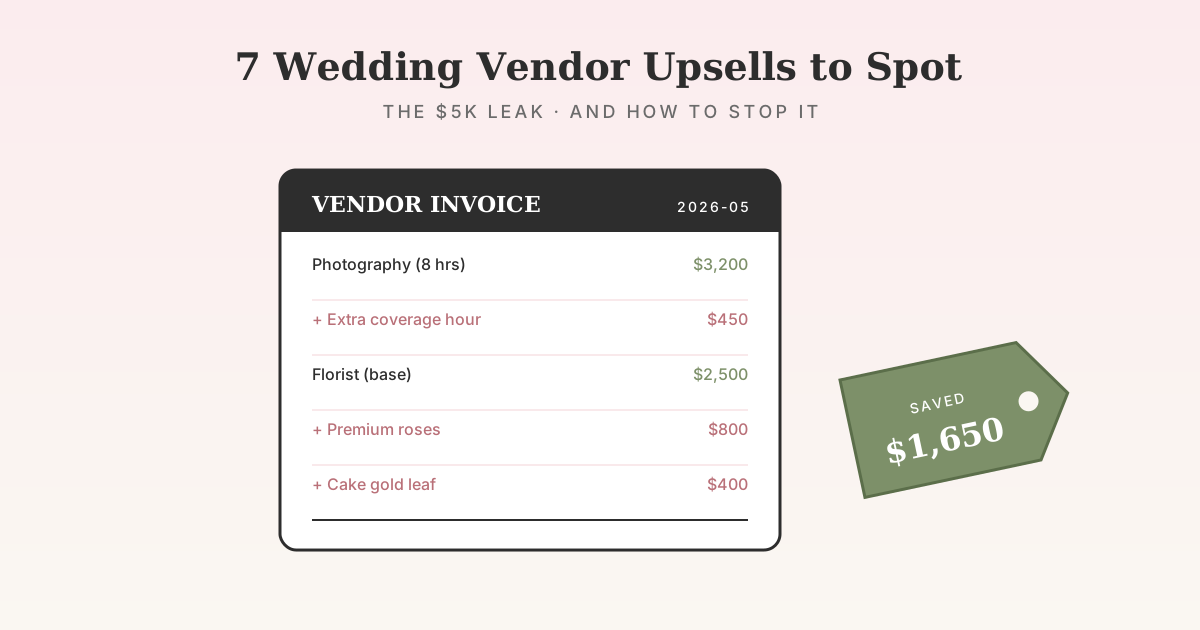
The average US couple loses $4,000-$6,000 to wedding vendor upsells they didn't plan for — not because the vendors are predatory, but because the upsells are scripted into the standard sales flow. Every category — florist, photographer, venue, planner, DJ, cake designer, officiant — runs a playbook with two or three well-rehearsed upsells. Knowing them in advance turns the conversation from “they're pressuring me” into “I expected that, here's what I want.” Below is the catalogue of seven upsells you'll encounter, the dollar-range each typically adds, the verbatim scripts that decline them politely — and the cases where the upsell is actually worth saying yes to.
Why vendor upsells happen — it's structural, not malicious
Wedding vendors operate on thin margins on the base package and earn most of their profit from add-ons. The florist who quotes you $2,500 for "the standard floral package" is probably making 12-18% on that base; the same florist who sells you the $700 ceremony arch upgrade is making 40-50% margin on the upgrade. The math forces upselling.
This is why the same vendor will sometimes seem inflexible on the base price (“we're already discounted there”) and suddenly very flexible on the upsells (“if you do the arch upgrade I can throw in the boutonnieres free”). They're not playing games — they're moving you toward the margin-heavy product. Knowing this stops you from misinterpreting flexibility as desperation.
The 7 most common upsells
1. Florist: the "premium" flower upgrade ($800-$2,500)
The pitch: "For an extra $800, we can upgrade your bridal bouquet to garden roses and add accent peonies to the centerpieces." What you're actually buying: 8-12 garden roses and 4-6 peonies across the order. The base package roses are perfectly photographable. Upgrade is worth it when: you specifically want peonies and your season supports them (May-June). Decline script:
"The base package looks great to me — I'd rather put that budget toward making the ceremony arch fuller, can we talk about that instead?"
2. Photographer: extra coverage hours ($400-$1,500)
The pitch: "For an extra hour of coverage, you'll get the bride getting ready and the reception send-off." The reality: most photographers bill overtime in full-hour blocks at $250-$500/hour. Worth it when: your timeline genuinely has 9-10 hours of content you want documented. Not worth it when: you're padding from 7 to 8 hours for a 20-minute send-off. The send-off is almost always shot in the last 15 minutes regardless. Decline script:
"Let's plan a tight 7-hour timeline that ends with the send-off. If we're running long, I'd rather skip the extra hour than pay for a buffer we may not use."
3. Venue: F&B minimum bump ($800-$3,000)
The pitch: "Upgrade to the premium bar package — it's only $12 more per guest." For 120 guests that's $1,440 added to the bill. The premium-tier liquor doesn't change the guest experience meaningfully — most guests won't notice the difference between mid-tier and premium gin in a cocktail. Worth it when: you have a wine-snob crowd or are doing a curated cocktail menu. Decline script:
"We're going with the standard bar — we'd rather put the difference toward late-night food or a coffee station."
4. Planner: "day-of" coordination add-ons ($500-$2,000)
The pitch: After you've booked a month-of coordinator, you'll get a list of “recommended add-ons” — extra meetings, vendor management, timeline updates. The base package usually covers what you need. Worth it when: the wedding has 200+ guests, 8+ vendors, or a destination component. For a standard 80-150 person local wedding, the base is sufficient. Decline script:
"Let's start with the base package and add specific meetings if we hit something we can't handle ourselves. I'd rather pay for what we use."
5. DJ: premium sound system ($300-$900)
The pitch: "For an extra $500 we'll bring the premium speaker system — much better dance floor sound." Worth it when: your venue is 200+ guests or has poor acoustics (high ceilings, hard surfaces). Not worth it when: your venue has built-in sound or your reception is 100 or fewer guests. Standard DJ rigs handle 150-person rooms fine. Decline script:
"Our space is small enough that the standard rig should be plenty. If sound is a problem at our walkthrough, we can revisit."
6. Cake designer: design upgrades ($200-$800)
The pitch: "For an extra $400 we can add gold-leaf accents and edible flowers." What this gets you: about 4-8 grams of edible gold leaf and 10-15 edible flowers. Worth it when: the cake is the visual centerpiece of the reception and you specifically want a premium decoration. Not worth it when: the cake will be cut and served within 20 minutes. Photos of plain buttercream cakes consistently score better than busy ones on wedding Instagram. Decline script:
"We're going with the clean buttercream — fresh florals from the florist will do the dressing-up at the venue."
7. The "rehearsal coordination" add-on ($300-$700)
Many planners, officiants, and venues will offer a separate rehearsal coordination fee. Worth it when: your wedding party is 8+ people or includes children. Not worth it when: your wedding party is small and your officiant covers rehearsal at no extra charge (most do). Ask your officiant first — usually they'll lead a 30-minute rehearsal as part of their ceremony fee. Decline script:
"Our officiant is handling the rehearsal walkthrough. We don't need duplicate coverage."
The universal 3-line decline script
For upsells outside the seven above, use this template:
Thank you for the option. We've looked at the budget and we're going to stick with [the base / what we discussed]. If we have room at the end, I'll come back to this.
Three things this script does right: thanks the vendor (keeps the relationship warm), commits to a clear no, and leaves the door open without promising anything. "If we have room at the end" is the polite version of "probably not."
When the upsell IS worth it
Not every upsell is wasted money. The ones genuinely worth the extra spend:
- Photographer second shooter for 100+ guests. Solo shooters miss reaction shots during the ceremony. $400-$800 well spent at this scale.
- Florist installation team for any structural piece. Ceremony arch, hanging installations, large altar pieces — installation labor is what separates good from bad execution. Not the place to economise.
- Venue uplighting for industrial / blank-canvas spaces. $400-$800 for color uplighting in a warehouse or empty ballroom transforms the space. Worth it.
- Late-night food service. $5-$10/guest. Drunk guests at 11 PM remember the slider truck. Drunk guests with no food remember being annoyed.
Rule of thumb: upsells that materially change guest experience are usually worth it. Upsells that mostly affect what looks like in close-up photos rarely are.
Where this advice breaks
These ranges apply to standard 80-150 guest weddings in mid-to-large US markets. For destination weddings, 200+ guest weddings, or weddings in NYC/SF/LA, multiply most ranges by 1.5-2x. For backyard / under-50-guest weddings, many of these upsells don't apply at all (no DJ, no planner, no F&B minimum).
For the broader budget conversation, see wedding cost breakdown 2026; for who-pays-what conventions, use the who pays calculator; for vendor-by-vendor timeline planning, see wedding planning timeline.