The 9-Month Wedding Planning Timeline (For Couples Who Hate 12-Month Lists)
9 months isn't a 12-month list with three months erased. The compressed-parallel framework with four overlapping tracks, weeks 1-3 priorities, and three cases where 9 months outperforms 12.
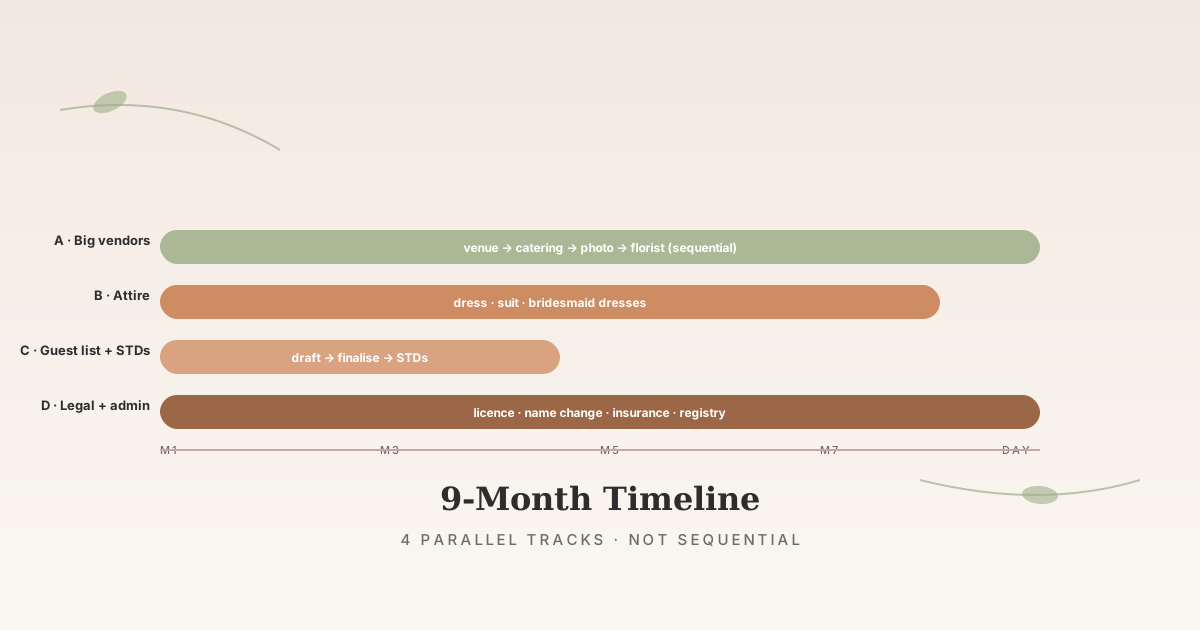
Most published “9-month wedding planning timelines” are 12-month checklists with the first three months cut. That gives you a stressful 12-month plan compressed, not an actual 9-month plan. The real difference at 9 months is parallel scheduling — tasks that traditionally run sequentially (venue → save-the-dates → bridal-party dresses) can and should overlap. Below: the 9-month compressed-parallel framework, what to book in the first three weeks (not the first three months), and the specific cases where 9 months actually outperforms 12.
The compressed-parallel approach
A 12-month timeline assumes you have time to do one major thing per month: month 1 venue search, month 2 vendors, month 3 dress, etc. A 9-month timeline can’t use that cadence — but it doesn’t have to. Many tasks have no actual sequential dependency; couples just default to running them in order because that’s how the listicle was written.
The four tracks that can run in parallel from week 1:
- Track A — Big vendor sequence. Venue → catering → photography → florist. Sequential because each depends on the previous (venue dictates catering options, etc.).
- Track B — Attire. Wedding dress → groom suit → bridesmaid dresses. Can start parallel with venue booking; doesn’t depend on it.
- Track C — Guest list + STDs. Draft list → finalise list → send digital STDs. Parallel with Track A.
- Track D — Legal + admin. Marriage licence research, name-change paperwork, wedding insurance, registry setup. Parallel with everything else.
Weeks 1-3 (not months 1-3) — what to lock fast
The fastest decay risks in a 9-month timeline are venue and wedding-party dress shipping. Both are 6-month lead times in their slowest path. Lock these in week 1-3, not month 1-3.
- Week 1. Set the budget. Talk to families about contributions. See wedding budget conversation with parents. Send digital STDs (yes, in week 1 — see when to send save-the-dates) and lock your wedding hashtag before the first STD goes out, so guests have one to use from day one.
- Week 2.Tour 3 venues. Don’t tour 8 — pick three by online research and commit to choosing among them. Sign with one by end of week 3.
- Week 3.Book photographer + catering (if venue doesn’t include). Start bridal-party dress conversations in parallel — even before you’ve picked your own dress, send your bridesmaids the colour-family direction so they can start looking.
Months 2-3 — the parallel build phase
- Wedding dress shopping (don’t order yet; just shortlist).
- Florist consultations (book by end of month 3).
- DJ / band booking.
- Cake / desserts tasting.
- Stationery designer / website launch.
- Begin guest accommodations conversations (room blocks).
Two parallel tracks here: aesthetic decisions (dress, florist, cake) and logistics (DJ, accommodations, website). One person can take each track if you’re a couple; trying to do everything jointly slows both.
Months 4-5 — the lock-in phase
- Order wedding dress (alterations need 8-10 weeks).
- Order bridesmaid dresses (6-10 weeks lead time).
- Finalise the menu with caterer.
- Book transportation (if needed).
- Start the seating chart skeleton — table shapes and the head table first, guests later once RSVPs settle.
- Plan honeymoon (book flights, lock the hotel).
Months 6-7 — invitations + details
- Send paper invitations (8 weeks out is the right window for a 9-month timeline).
- Confirm vendor timelines and lock day-of contacts.
- Bridesmaid dress alterations start.
- Wedding party gifts purchased.
- Hair and makeup trials.
Months 8-9 — the runway
- RSVP deadline (week 8 mark, two weeks before wedding).
- Final headcount to caterer (one week before).
- Final dress fitting (1-2 weeks out).
- Final seating chart once the RSVP deadline closes — print or share it with the venue and MC.
- Day-of timeline distributed to vendors and bridal party.
- Welcome bags assembled (if doing).
When 9 months outperforms 12
Three specific cases:
- Decision fatigue. 12-month timelines often produce 3 months of obsessive overthinking on early decisions. The forced pace of 9 months keeps each decision in its budget. Couples on 9-month timelines report fewer regrets per decision.
- Vendor pricing. The 12-month booking pushes you into vendor “peak inquiry season” — popular vendors are more booked, prices are firmer. At 9 months out, the same vendors are 1-2 quotes deeper into their queue and frequently more flexible on discount.
- Plan stability. 12 months is long enough for lives to shift — job moves, health issues, family changes — that force the wedding plan to compress mid-stream. 9 months runs through a more stable window of life.
Generate your personal checklist
For a checklist tailored to your specific date with month-by- month deadlines, use the wedding planning timeline generator. If your engagement is genuinely under 6 months, see wedding timeline under 6 months — different framework, different cuts.
Where this timeline breaks
Two cases. First, destination weddings in popular regions during peak season — venues and photographer-team flights are booked 12-18 months out. A 9-month timeline forces you to an off-peak destination date or a different location. Second, couples with custom-everything taste (custom-designed dress, custom-made stationery, custom invitations from a single small designer) — the artisan supply chain has 6-month minimum lead times that don’t compress, and a 9-month timeline pushes you toward more accessible (faster-shipping) options. That’s a constraint, not a flaw.